
Clam Chair by Arnold Madsen
Designed in Copenhagen in 1944 by Danish upholsterer Arnold Madsen, the Clam Chair (Muslingstol) became one of the defining lounge chairs of the Danish Modern period. Originally produced by Madsen & Schubell in Denmark, the Clam Chair is characterised by its sculptural form and distinctive arms and legs. Our estate-authorised new editions are handcrafted in Sweden using traditional upholstery techniques and precise cabinetmaking.
-
Regular price From £5,900Regular priceUnit price per
-
Regular price From £5,900Regular priceUnit price per
-
Regular price From £5,850Regular priceUnit price per
-
Regular price From £5,900Regular priceUnit price per
-
Regular price From £5,900Regular priceUnit price per
-
Regular price From £5,900Regular priceUnit price per
-
Regular price From £1,700Regular priceUnit price per
-
Regular price From £1,700Regular priceUnit price per
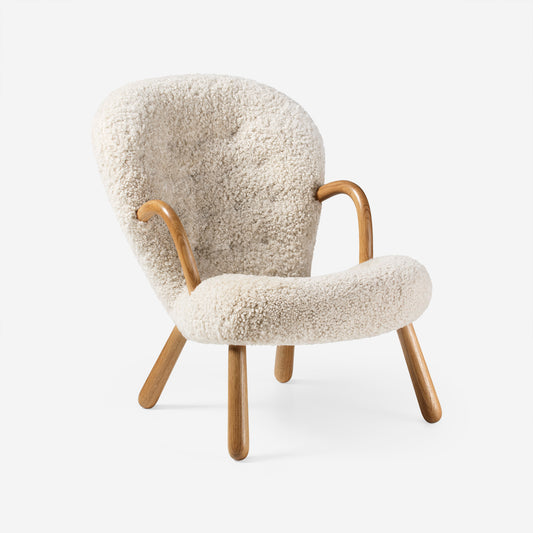
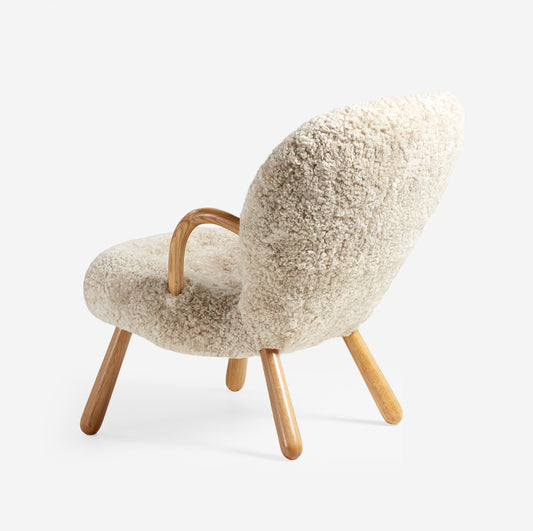
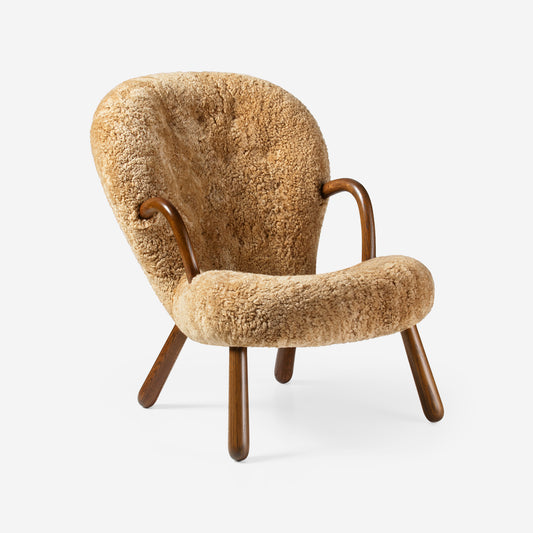
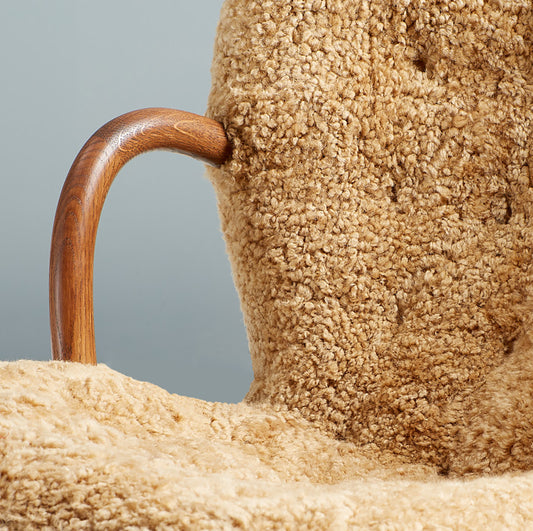
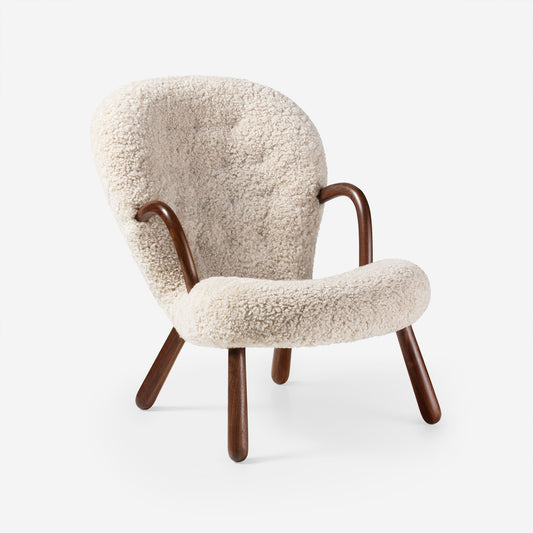
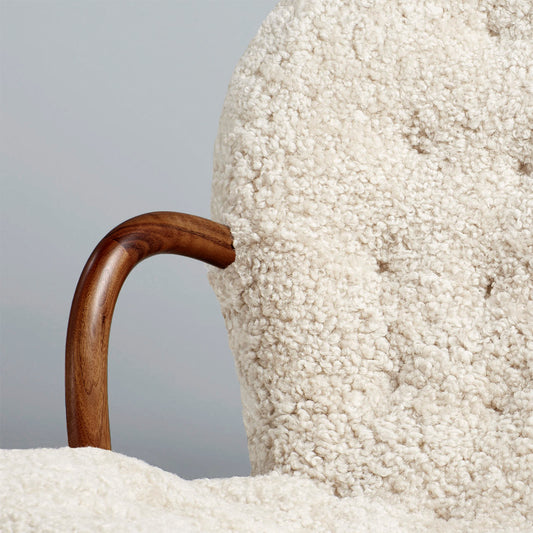
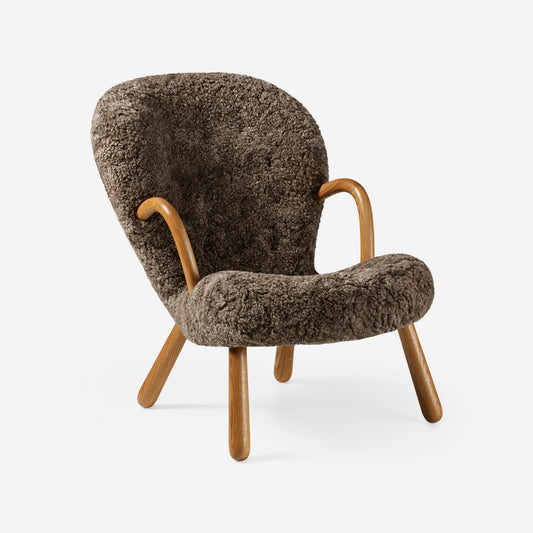
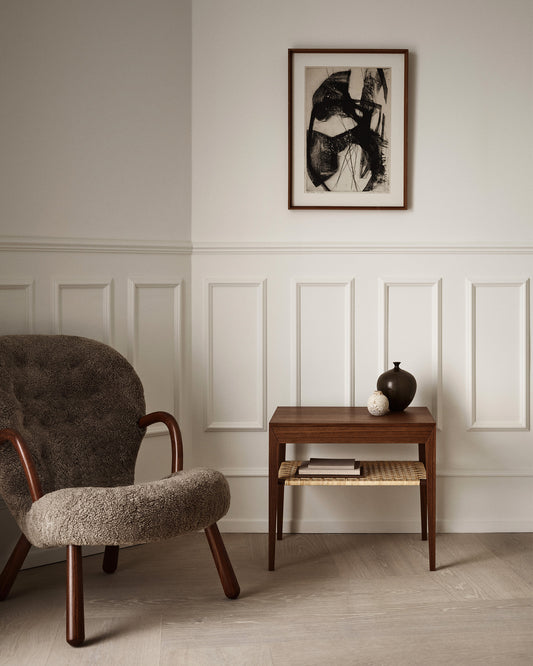
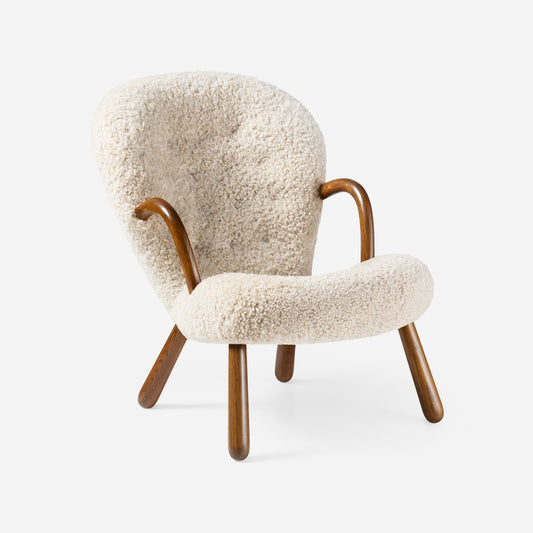
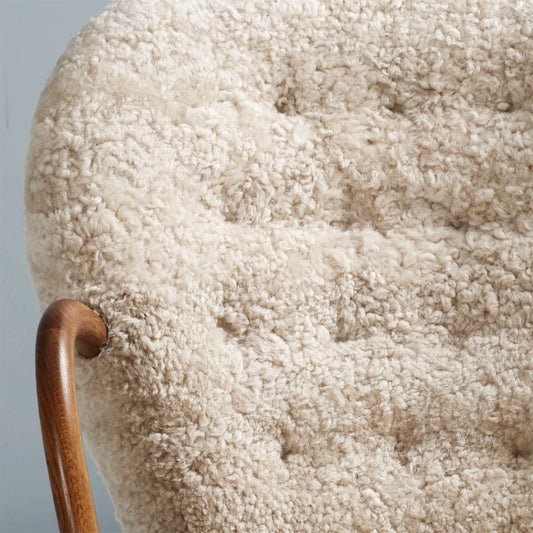
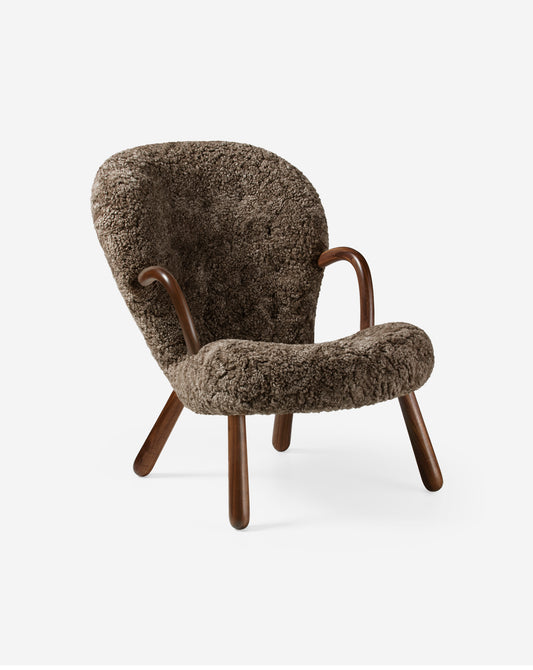
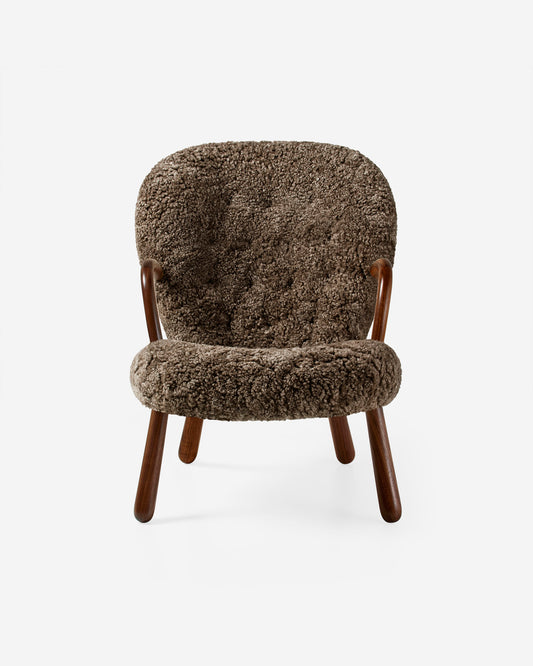
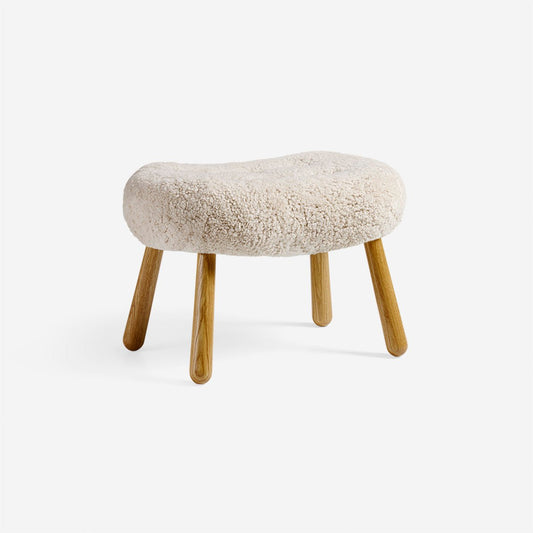
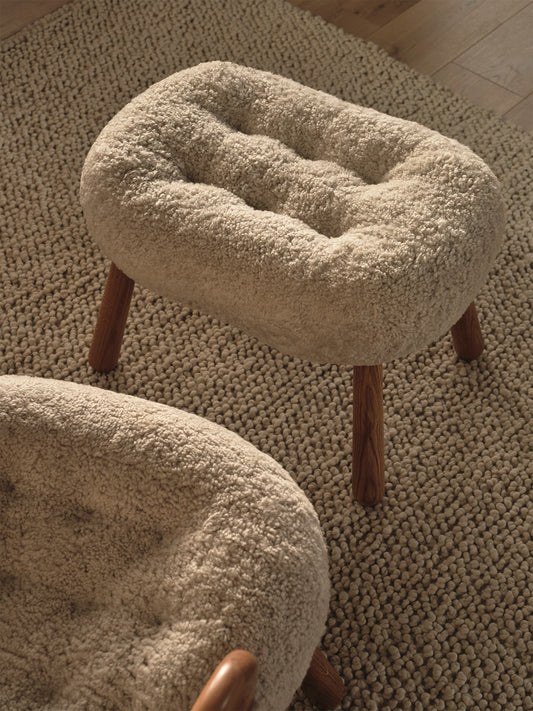
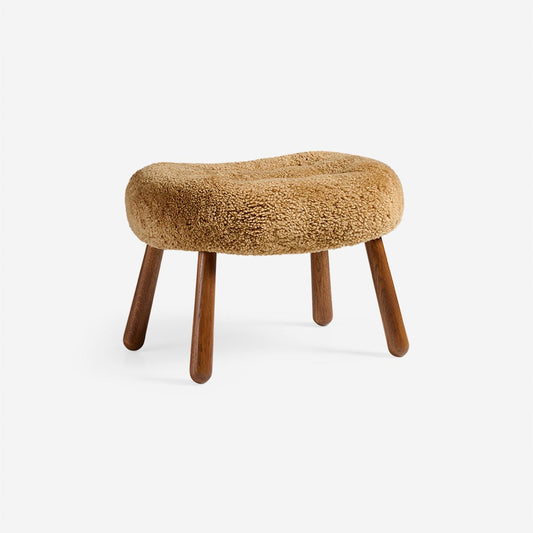
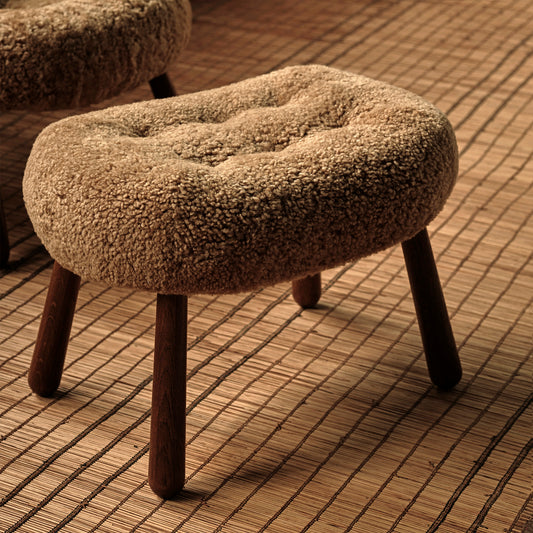
The Clam Chair by Arnold Madsen
The Clam Chair (Muslingstol) was designed in Copenhagen in 1944 by Danish upholsterer and designer Arnold Madsen. Created during the final years of the Second World War, the chair emerged from a small basement workshop at Gothersgade 158B, where Madsen operated his upholstery business. From these modest beginnings, it would go on to become one of the most recognisable lounge chairs of the Danish Modern era.
Unlike many of his contemporaries, Madsen was not formally trained as an architect. He approached design through material experimentation rather than academic drafting. The Clam Chair began as a small plaster model shaped by hand, inspired by the form of an open shell. Its curved, enveloping seat and distinctive club-shaped legs reflected the emerging organic language of mid-century Scandinavian furniture, as softer, biomorphic forms began to replace heavier historical styles.
To translate his plaster model into a workable wooden structure, Madsen approached the Copenhagen cabinetmakers Winther & Winding. There he met Henry Schubell, a highly skilled cabinetmaker who succeeded in constructing the first hardwood frame. The joinery required precision and ingenuity to preserve the chair’s flowing silhouette while ensuring strength and stability. This collaboration led to the formal partnership of Madsen & Schubell in 1945.
-

The Clam Chair listed as ‘Musling’ in a Vik & Blindheim sales catalogue, c. 1955

Danish Production and International Recognition
Early examples of the Clam Chair were produced in Denmark with solid beech frames and oak arms and legs. Upholstered in textured fabrics or sheepskin, the chair was sold through respected Copenhagen retailers and quickly gained attention for its comfort and sculptural presence.
In the early 1950s, the design was licensed for production in Norway by the manufacturer Vik & Blindheim in Sykkylven. There it was marketed simply as the “Musling.” As was common practice at the time, furniture was often promoted by model name rather than by designer, a detail that later contributed to confusion surrounding authorship. Nevertheless, the chair became one of Vik & Blindheim’s best-selling models throughout the decade and secured its place within the broader Scandinavian Modern movement.
Although Arnold Madsen designed other notable pieces — including Model 9, later known as the Oda Chair — the Clam Chair remains his most celebrated work. Its balance of sculptural form, structural intelligence and comfort exemplifies the collaborative workshop tradition that defined Danish furniture in the post-war years.
Today, the Clam Chair is recognised as an icon of mid-century design. First conceived in a Copenhagen basement workshop, it stands as a lasting testament to Arnold Madsen’s craftsmanship and to the material innovation that shaped Danish Modern furniture in the twentieth century.
Clam Chair FAQ
Who designed the Clam Chair?
The Clam Chair (Muslingstol) was designed in Copenhagen in 1944 by Danish upholsterer Arnold Madsen. It was his first original furniture design and later became one of the most recognisable lounge chairs of the Danish Modern era (1930-1970).
When was the Clam Chair first produced?
The earliest examples were produced in Denmark by Madsen & Schubell from 1945. In the early 1950s, the design was licensed for exclusive production in Norway by the manufacturer Vik & Blindheim, where it was marketed under the name “Musling" until 1967.
What does “Muslingstol” mean?
“Muslingstol” is Danish for “Clam Chair.” The name refers to the chair’s sculptural form, inspired by the shape of an open shell.
Is this an authorised edition of Arnold Madsen’s design?
Dagmar produces the Clam Chair in agreement with Arnold Madsen’s family, following the original construction principles and material integrity of the 1944 design. Dagmar's edition is the only Clam Chair available today authorised by Arnold Madsen's family.